
Written by Anthony Johnson
If you have ever read a photography contract and stumbled across the phrase derivative works, you are not alone.
It sounds technical. A little legal. Maybe even a little cold.
But the idea behind it is actually very simple.
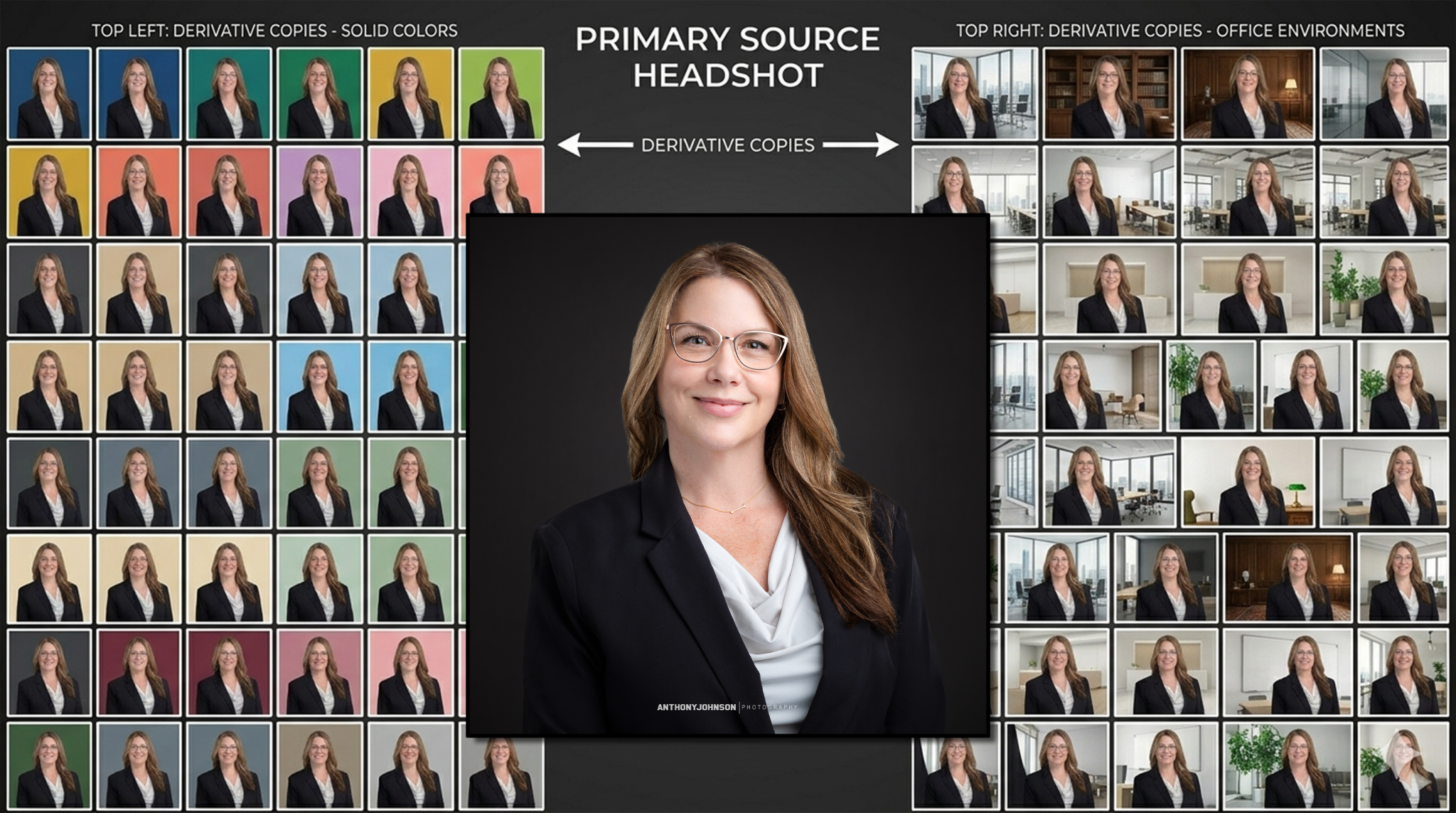
A derivative work is a version of an original image that has been changed into something new. That could mean a re-edit, a design treatment, a composite, an animation, a background replacement, or even an AI-generated variation based on the original photo.
In plain English, it means the image did not stay as delivered. It was turned into something else.
That may not sound like a big deal at first. After all, businesses reuse content all the time. Marketing teams resize things, designers adapt assets, and companies try to get the most life possible out of a strong image.
That part makes sense.
The bigger question is this:
Should a company be doing that without the photographer’s involvement or permission?
That is where the conversation changes.
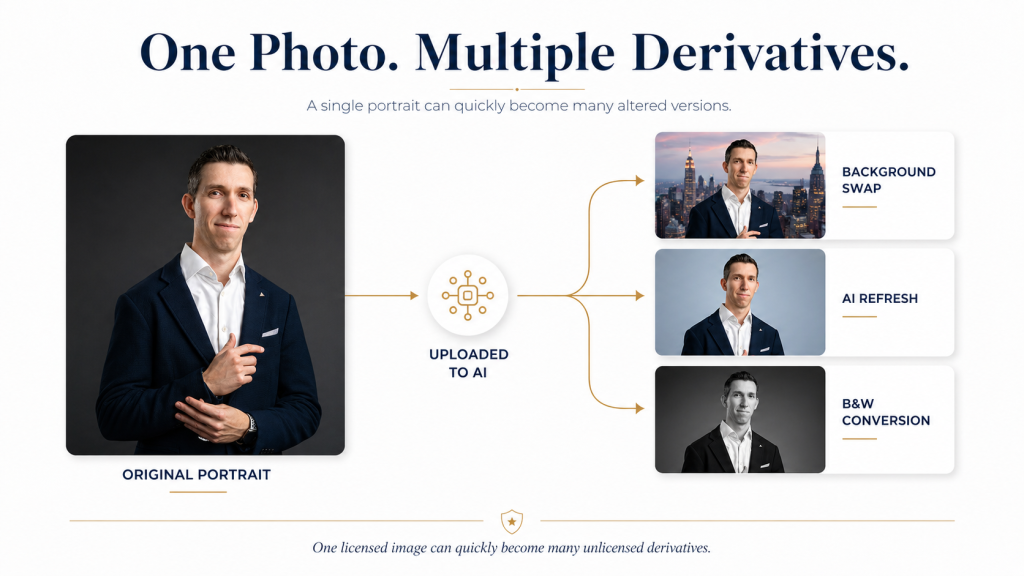
A derivative work is not simply posting the photo on your website or sharing it on social media within the license you were given.
It is taking the original image and altering it into a new version.
That can include things like:
adding graphics or heavy text treatments
changing the color grading
replacing the background
combining the photo with other visual elements
creating animated versions
pulling out part of the image for a separate design
using AI tools to restyle or transform it
making alternate versions for ads, campaigns, or promotional pieces
Once the image is materially changed, you are no longer just using the original photograph. You are building something new from it.
That is why the term matters.
This happens more often than most people realize.
A company books a shoot. The photographer creates the image. The final files are delivered.
Then later, the company or its marketing team may decide to:
turn the image into an ad
create multiple graphic versions
run it through AI for new variations
make a stylized motion asset
pull pieces from it for a campaign
reuse it across more and more platforms in altered forms
From the business side, this can feel efficient. The company already paid for the shoot. They already have the file. They want to get more mileage out of it.
That instinct is understandable.
But from the photographer’s side, something important is happening.
The original image is becoming the raw material for additional creative assets, additional business value, and additional commercial use.
And often, the photographer is no longer part of that process.
That is the real issue.
Not whether it is easy.
Not whether the software allows it.
Not whether a marketing department can make it happen in-house.
The real question is whether it is fair.
Because when a company creates derivative works without permission, it is often doing something bigger than just “updating an image.”
It is extending the value of the work while cutting out the original creator.
That should give people pause.
As creators, photographers do not just show up with a camera and press a button. They shape the lighting, the composition, the mood, the polish, the retouching, and the final look that made the image valuable in the first place.
So when that image becomes the foundation for multiple new versions, and the creator is bypassed, the business value keeps growing while the original creator stays stuck at the starting line.
That is a problem.
This is exactly why photographers care about derivative works language in their contracts — or why they should, if they have not addressed it clearly in writing.
The original image is not just a file. It is creative work. It is intellectual property.
And generally speaking, copyright protects not only the original work itself, but also the creator’s right to control how that work is altered, adapted, or turned into something new.
That is where many clients get tripped up.
Paying for photography does not usually mean buying unlimited rights to do anything you want with the image forever. In most cases, it means you are receiving permission to use the delivered work in agreed ways.
That is very different from having open-ended authority to remake, restyle, re-edit, or transform the image into new assets whenever you want.
This is one of the biggest reasons photographers include derivative works language in their agreements. It creates clarity around where normal usage ends and unauthorized alteration begins.
Here is where this becomes especially important.
When a company creates derivative works internally, it can start to resemble the same kind of bypass that many creators worry about with AI.
The original creator does the hard part.
They create the source material.
They create the thing with real value.
Then someone else takes that foundation and builds more value on top of it without properly bringing the creator into the second half of the equation.
That should not sit comfortably with people.
Because if businesses normalize this behavior, the long-term effect is simple: creators lose income, lose control of their work, and lose opportunities that used to help keep their businesses alive.
And when that happens enough times, some creatives do not just get frustrated.
They close shop.
That means fewer experienced photographers. Fewer professionals who can deliver consistent quality. Fewer small business owners who can afford to keep serving their communities.
This is not just about contracts.
It is about sustainability.
A lot of photographers stay quiet because they do not want to sound difficult.
They want to be easy to work with. Helpful. Flexible. Professional.
That instinct comes from a good place.
But there is a point where being “easy to work with” turns into quietly giving away the parts of the business that keep the lights on.
Photographers need to understand that derivative use is not some tiny technical issue.
licensing income
brand control
portfolio quality
long-term client expectations
and the overall health of the business
If creators do not protect their work, they may slowly train the market to believe that one fee should buy unlimited downstream value — and in more price-sensitive corners of the market, that expectation is already taking hold.
That is not sustainable.
The good news is this does not have to be adversarial.
There is a better path.
If a company knows it wants the freedom to create derivative works, it should discuss that openly with the photographer from the start.
That allows both sides to negotiate something reasonable.
Maybe the company needs a narrow derivative-use license for a specific campaign.
Maybe they need a limited term.
Maybe they only need altered use on a few selected images.
That is a normal business conversation.
What is not reasonable is assuming those rights are automatically included.
At the same time, it is also fair to say that many companies do not want to pay for unlimited derivative rights for one or two years across every possible use case. That can become expensive quickly, and understandably so.
So instead of trying to lock in unlimited altered use upfront, a smarter solution is often this:
Negotiate the derivative rights you actually need right now.
Keep the term reasonable.
Then renew only if the image continues to perform well for the business.
That approach is more practical and more fair.
In many cases, the best answer is not endless reuse.
It is a reshoot.
If an image is working really well for your company, that is usually a sign that strong photography is helping your brand. That is a good thing.
So rather than stretching one image forever, consider planning a fresh shoot in one or two years and negotiating the rights that make sense for that next phase.
That gives the company:
updated imagery
better brand consistency
content that feels current
and a more strategic creative partnership
And it gives the photographer the chance to keep creating value instead of watching the same old image get pushed farther and farther beyond the original agreement.
That is healthier for both sides.
It is easy to talk about licensing like it is just paperwork.
But behind the contract is a real person.
A photographer is often a small business owner doing far more than people realize. They are paying for equipment, insurance, software, editing time, education, taxes, travel, backups, marketing, and everything else it takes to run a professional business.
Some are supporting families.
Some are paying for childcare.
Some are trying to stay afloat in an economy where every cost keeps rising.
Most photographers genuinely love helping people. They love creating work that helps businesses look polished, trustworthy, and professional.
But they also need to stay in business.
Supporting your photographer fairly is not just about being nice. It is part of helping good creators continue doing the work that helped your business in the first place.
Derivative works are not just legal jargon buried in a contract.
They matter because they sit at the intersection of creativity, fairness, copyright, and business survival.
When a company alters a photographer’s image into new versions without clear permission, it is often extending the value of that image while bypassing the person who created it. That may feel efficient in the short term, but it can hurt the creative businesses that make this work possible in the first place.
There is a better way.
Talk to your photographer.
Be honest about your goals.
Negotiate rights that make sense.
Renew the license if the image keeps working for you.
Or plan a future reshoot and build the next round of assets the right way.
That creates a healthier relationship, stronger work, and a more sustainable creative industry.
Good photographers want to help. They want to collaborate. They want to create images that support your growth.
And if you are trying to understand derivative works, copyright, licensing, or how to structure image use in a fair and practical way, that conversation does not have to feel intimidating.
It just needs to be clear.
If you are a business owner, marketing team, or fellow creative trying to better understand photography usage, I am always happy to help educate, guide, and make these topics easier to understand.
Because protecting creators and building strong businesses should not be at odds.
They should work together.
If you’re planning an event where perception matters—grand openings, awards dinners, conferences, partner receptions—what happens after the event is what determines whether your photos look like documentation… or like a polished recap you’re proud to publish.
This is what professional post-production really delivers:
No guessing. No scrambling.
Just a clean, brand-ready story—start to finish.

If you’re planning an event where perception matters—leadership summits, conferences, awards dinners, partner receptions—this is the difference between photos that feel like documentation… and a gallery that feels like a brand asset.
If you want a finished set that’s consistent, intentional, and ready to publish, let’s talk about your event and what you need the photos to do afterward.